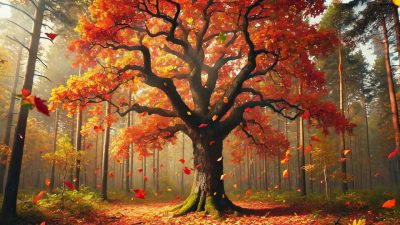
Autumn is a season that fascinates us with its beauty and the transformations it brings. Landscapes are adorned with warm and enveloping shades as tree leaves take on tones of orange, red, and yellow before falling to the ground. This natural spectacle has inspired poets, artists, and thinkers throughout the centuries. But what is the scientific reason behind this color change? In this article, we’ll explore why leaves change hues in autumn, analyzing the biological and chemical processes occurring within plants.
The Role of Chlorophyll
During spring and summer, leaves appear green due to the presence of chlorophyll, an essential pigment for photosynthesis. Chlorophyll absorbs sunlight—particularly red and blue wavelengths—and uses this energy to convert carbon dioxide and water into glucose and oxygen. This process is fundamental for plant growth and for producing the energy necessary for their vital functions.
The Decrease in Sunlight
With the arrival of autumn, days become shorter and the intensity of sunlight diminishes. This change signals to plants the approaching winter. In response, trees begin to prepare for the cold season by gradually reducing chlorophyll production. As chlorophyll degrades, the green color of the leaves fades, allowing other pigments present in the leaf to emerge.
The Hidden Pigments: Carotenoids and Anthocyanins
- Carotenoids: These pigments are responsible for the yellow and orange hues in leaves. Carotenoids, such as beta-carotene and xanthophyll, are present in leaves throughout the year but are masked by the dominance of chlorophyll during spring and summer. When chlorophyll decreases, carotenoids become visible, giving leaves their vibrant autumn colors.
- Anthocyanins: These pigments produce colors ranging from red to purple. Unlike carotenoids, anthocyanins are not always present in leaves but are synthesized in autumn in response to specific environmental conditions. The accumulation of sugars in the leaves, combined with sunlight and cool temperatures, stimulates the production of anthocyanins.
Chemical Processes Behind the Color Change
The color change in leaves results from a series of complex chemical processes:
- Reduction of Photosynthesis: The decrease in sunlight and temperatures slows down photosynthesis. Chlorophyll degrades and is no longer replaced at the same rate.
- Accumulation of Sugars: With reduced photosynthesis, the sugars produced remain trapped in the leaves due to the formation of a layer of cells called the “abscission layer” at the base of the petiole, which prevents the transport of substances.
- Production of Anthocyanins: The accumulation of sugars and sunlight stimulates the synthesis of anthocyanins. These pigments protect the leaves from damage caused by excessive sunlight and help recover nutrients before the leaves fall.
Environmental Factors Influencing Autumn Colors
Climatic conditions play a crucial role in the intensity and variety of autumn colors:
- Sunlight: Sunny days favor the production of anthocyanins, intensifying red and purple tones.
- Temperatures: Cool but not freezing nights slow down chlorophyll degradation and promote sugar accumulation.
- Precipitation: A moderately dry summer followed by an autumn with limited rainfall can enhance autumn colors.
Conversely, adverse conditions like early frosts, drought, or excessive rain can dull the leaves’ chromatic spectacle.
The Falling of Leaves
In addition to the color change, autumn is characterized by the falling of leaves. This process, known as abscission, is a survival strategy adopted by deciduous trees to face harsh winter conditions. By shedding their leaves, trees reduce water loss and the risk of structural damage caused by the weight of snow.
The Ecological Significance of the Color Change
The phenomenon of color change is not just pleasing to the eye but also has ecological significance:
- Protection from Damage: Anthocyanins protect leaves from damage caused by intense sunlight and cold, allowing the plant to recover essential nutrients.
- Nutrient Cycle: The decomposition of fallen leaves enriches the soil with nutrients, promoting plant growth in the next season.
Autumn in Culture and Art
The enchantment of autumn colors has deeply influenced human culture:
- Literature and Poetry: Poets like John Keats and Japanese authors have celebrated autumn as a symbol of transition and reflection.
- Art: Painters such as Vincent van Gogh and Claude Monet have immortalized autumn landscapes in their works, capturing the unique shades and atmospheres of the season.
- Traditions: In many cultures, autumn is associated with festivals that celebrate the harvest and gratitude, such as Thanksgiving in the United States or the Mid-Autumn Festival in China.
Conclusion
Autumn is a season of transformation, both in nature and within the human spirit. The color change of leaves is a fascinating phenomenon that combines science, ecology, and aesthetic beauty. Understanding the processes that cause leaves to turn orange and red allows us to appreciate this time of year even more. As we walk along tree-lined avenues and observe the falling leaves, we can reflect on the cycle of life and the continuous renewal that nature offers us.
Download our autumn videos available for download and use in your projects.
Here are some examples: